

Key Takeaways
The Zipper Merge
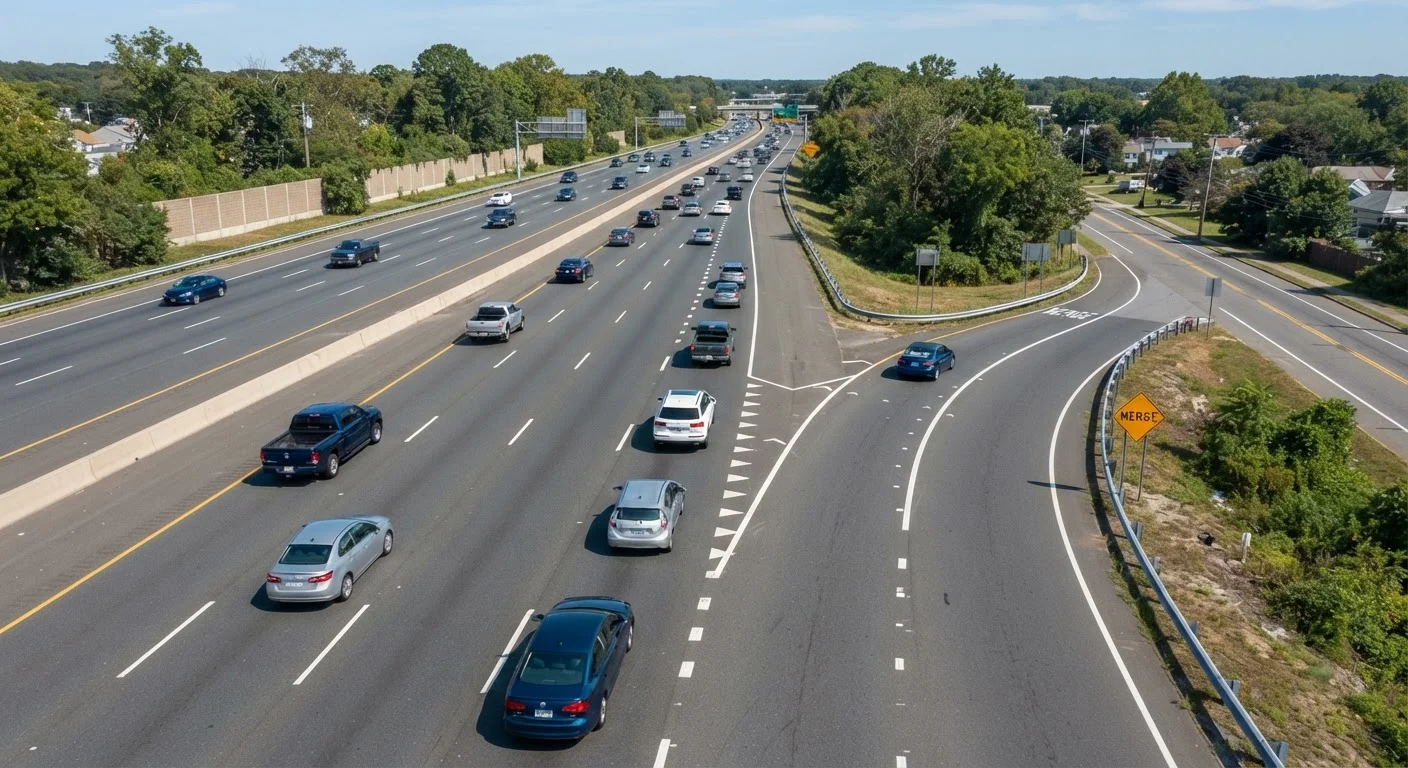
The zipper merge is a lane-change technique where drivers in a closing lane continue driving to the merge point — rather than cutting over early — and then take turns alternating into the remaining lane, one car at a time, like the teeth of a zipper. It is the method recommended by transportation engineers and departments of transportation in many U.S. states as the most efficient way to handle lane reductions. When done correctly, it reduces overall traffic backup and minimizes speed differences between lanes.
Studies by the Minnesota Department of Transportation found that the zipper merge can reduce the length of merge-zone backups by up to 40% compared to early merging behavior.
Why Most Drivers Merge Too Early
When drivers see a "Lane Ends" sign, the instinct is to move over immediately. This feels polite — nobody wants to be the person "cutting" at the front of a line. But that early shuffle creates a problem: one lane fills with slow or stopped traffic while the closing lane sits empty ahead. The result is a longer backup, more braking, and more frustrated drivers.
Traffic engineers refer to this as early merge behavior, and it is one of the leading contributors to unnecessary congestion in work zones and highway bottlenecks. The closing lane exists for a reason — it was built to carry vehicles to the merge point, not to sit unused while drivers queue unnecessarily in a single lane a quarter-mile back.
Signal Early, Not Last-Second
A signal activated just before a lane change gives other drivers almost no time to respond. Aim to signal at least three to five seconds — or roughly 100 feet at highway speeds — before you begin moving. This simple habit dramatically reduces the chance of a conflict or sudden braking.
Understanding how anticipation and smooth braking habits complement good merging decisions is explored in our guide to smooth driving and traffic anticipation.
How the Zipper Merge Actually Works
The zipper merge is straightforward in principle: both lanes continue moving toward the designated merge point, and drivers alternate — one from each lane — as the lanes combine. Think of two lines at a grocery store merging into one register. Each party takes a turn. Neither cuts; neither waits indefinitely.
In practice, this requires two things from drivers:
- The merging driver must signal early, match the speed of the through lane, and look for a safe gap at the merge point — not force their way in.
- The through-lane driver must allow one vehicle to merge in front of them at the merge point without accelerating to block the gap.
That cooperative exchange is what keeps traffic moving. When either side refuses to cooperate — by blocking gaps or by cutting multiple cars — the system breaks down.
Up to 40%
Reduction in merge-zone backup length
Research by the Minnesota Department of Transportation found zipper merging can cut backup length by up to 40% compared to early merging.
~33%
Of U.S. states actively promoting zipper merge
Multiple state DOTs — including Minnesota, Missouri, Colorado, and Kansas — have launched public campaigns encouraging late, cooperative merging in work zones.
Everyday Lane Changes: The Basics That Still Matter
Not every lane change is a merge situation. Routine lane changes — passing on the freeway, moving to an exit lane — carry their own rules that many drivers treat as optional once they've been licensed for a few years.
A safe lane change follows a consistent sequence: check mirrors, signal, check blind spots by briefly turning your head, and then move — not the other way around. Signaling after you've already started moving defeats the purpose of the signal entirely. Other drivers need lead time to react.
Matching the speed of the destination lane before completing the change is equally important. Moving into a faster lane while driving slower forces drivers behind you to brake hard. Moving into a slower lane while traveling fast creates a different hazard. The goal in both cases is to enter the lane with minimal disruption to existing traffic flow.
Road Rage, Misunderstanding, and the Culture Problem
Much of the hostility around merging comes from a mismatch in expectations, not actual aggression. A driver using the full length of a closing lane — doing exactly what engineers recommend — can appear to be cutting to a driver who merged early and waited. That perception gap causes horn-honking, blocking behavior, and escalating tension.
The solution is partly individual and partly cultural. Individually, recognizing that a late-merging driver is not being rude — just efficient — defuses the frustration before it starts. Socially, as more states run public campaigns explaining the zipper merge, the behavior becomes more normalized and less confrontational.
If you encounter a driver who won't allow the alternating exchange, the safest response is to yield and merge behind them rather than contest the gap. No advantage gained in a merge zone is worth the risk of a collision or a road-rage escalation.
State Laws Vary on Merge Behavior
While the zipper merge is widely endorsed by traffic engineers, specific right-of-way laws at merge points differ by state. Some states have codified yield requirements for merging drivers; others leave it to general safe-driving statutes. When in doubt, posted signage in a work zone takes legal precedence over general driving norms.