

Key Takeaways
Our Verdict
Both private sellers and dealerships can be the right choice depending on a buyer's priorities. Private sales reward buyers who are informed, mechanically savvy, and willing to do legwork in exchange for a lower price. Dealerships provide structure, protections, and convenience — but those benefits come at a cost that is built into the price.
| Best for | Recommended |
|---|---|
| Budget-conscious buyers comfortable doing their own due diligence | Private Seller |
| Buyers who want financing options and purchase protections | Dealership |
| First-time used car buyers who want a lower-stress experience | Dealership |
| Experienced buyers targeting a specific make or model at a specific price point | Private Seller |
Two Very Different Transactions
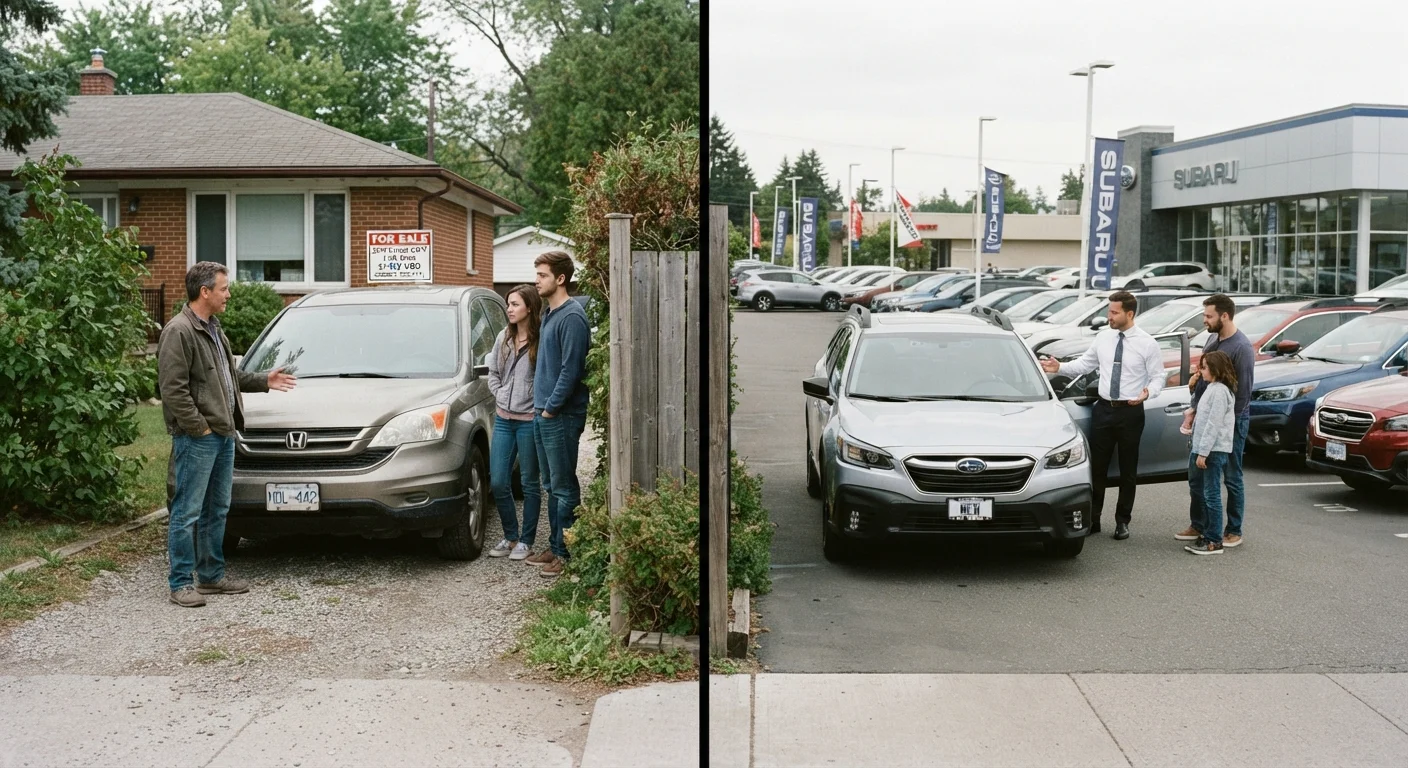
When you shop for a used car, you're not just choosing a vehicle — you're choosing a type of transaction. Buying from a private seller and buying from a dealership involve different rules, different risks, and different leverage points. Understanding those differences before you start shopping will help you avoid surprises and negotiate from a position of knowledge.
Weighing new versus used is the first big decision most buyers make. Once you've landed on used, where you buy it becomes the next critical question.
| Private Seller | Dealership | |
|---|---|---|
| Typical Price Level | Below retail market value | Retail pricing with margin built in |
| Warranty Coverage | Rarely included; usually as-is | Often available; CPO programs offered |
| Financing Options | Buyer must arrange independently | On-site financing available |
| Consumer Protections | Minimal; governed by state law | FTC Buyers Guide required; state lemon laws may apply |
| Paperwork Handling | Buyer manages title and registration | Dealer handles most administrative steps |
| Negotiation Dynamic | Direct but personal; less flexible | Structured; more room on fees and add-ons |
| Vehicle Inspection History | Usually undocumented | Often inspected and reconditioned |
Price and Negotiation
Private sellers generally list vehicles closer to private-party market value — a figure that tends to be lower than retail dealer pricing. Because a private seller has no overhead (no lot fees, no detailing staff, no finance department), they can afford to price lower and still come out ahead. That savings can be real and meaningful, particularly on older vehicles.
Dealerships price used cars at retail, incorporating reconditioning costs, a profit margin, and sometimes add-on fees. However, dealership pricing is not fixed. Understanding how dealer pricing works — including which fees are genuine and which are negotiable — gives you real leverage at the table.
With a private seller, negotiations tend to be more direct but also more personal. Sellers may have emotional attachment to their vehicle and less flexibility on price than a dealership would. Cash talks loudest in private transactions.
Always Confirm Market Value First
Before entering any price negotiation — private or dealer — check the vehicle's current market value using established automotive valuation tools. Knowing the realistic range for a specific year, make, model, mileage, and condition means you negotiate from fact rather than feeling. This single step eliminates most of the guesswork in a private sale.
Protections, Warranties, and As-Is Risk
This is where the two experiences diverge most sharply. Most private sales in the U.S. are completed as-is, meaning once you hand over the money, any problems the car has become your problems. There is no warranty, no return policy, and limited legal recourse unless fraud can be proven.
Dealerships, by contrast, are bound by state consumer protection laws and federal regulations such as the FTC Used Car Rule, which requires dealers to display a Buyers Guide disclosing whether a vehicle comes with a warranty or is sold as-is. Many dealers offer certified pre-owned (CPO) programs that include inspections to a manufacturer standard and limited powertrain or bumper-to-bumper warranties.
"As-Is" Means Exactly That
In a private sale, verbal assurances from a seller carry very little legal weight. If a seller says "it runs great" and the transmission fails a week later, you typically have no recourse. Never skip an independent pre-purchase inspection in a private transaction, regardless of how trustworthy the seller appears or how clean the car looks.
Before comparing prices across either channel, check what each price actually includes — warranty coverage alone can shift the true cost of ownership significantly.
Financing and Paperwork
Financing a dealership purchase is straightforward: dealers have established relationships with banks and credit unions and can often arrange financing on the spot. This convenience has a cost — dealers may mark up the interest rate above what a lender directly would offer — but the process is streamlined.
Financing a private sale requires more initiative. You'll typically need to secure a loan from your own bank or credit union before the transaction and arrange the title transfer independently. Many lenders do offer private-party auto loans, but approval timelines and available amounts can differ from dealer loans.
The paperwork burden is also heavier in a private sale. You'll handle the title, bill of sale, odometer disclosure, and registration yourself. Dealerships manage most of this administratively, though that convenience is reflected in documentation fees. Before you sign anything at a dealership, understand what each document commits you to.
Due Diligence: What You Must Do Either Way
Regardless of where you buy, several steps are non-negotiable for any used vehicle purchase.
- Vehicle history report: Run the VIN through a recognized history service to check for accidents, title problems, odometer rollbacks, and prior ownership.
- Pre-purchase inspection (PPI): Have an independent mechanic — not the seller's — inspect the car before you commit. This is especially critical in private sales but valuable at dealerships too. See questions to ask before you test drive for a practical checklist.
- Test drive: Drive the car on varied road types, including highway speeds. Listen for unusual sounds; pay attention to how it brakes, shifts, and handles.
Private sales carry more information asymmetry — the seller knows the vehicle's history intimately; you don't. That gap is precisely why independent verification is essential, not optional.
~40%
Share of used car sales through private parties
Industry estimates have consistently shown that a substantial share of used vehicle transactions in the U.S. occur outside of franchised and independent dealerships.
1 in 5
Used vehicles with undisclosed prior damage
Automotive history data providers have reported that a significant share of used vehicles carry accident or damage history not disclosed upfront by sellers.