

Key Takeaways
Why a Pre-Purchase Inspection Is Worth the Cost
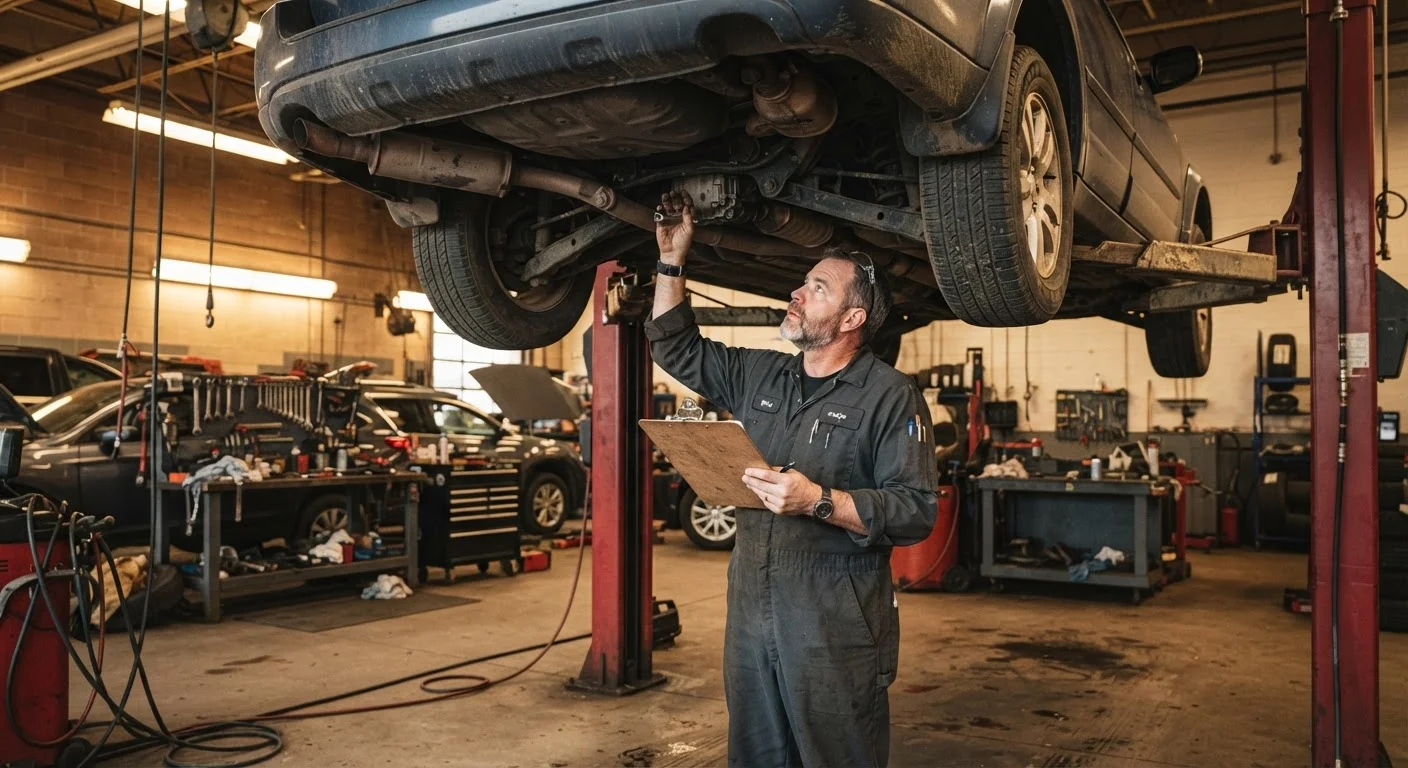
A used vehicle listing tells you what the seller wants you to know. A pre-purchase inspection (PPI) tells you what the car actually is. For a fee that typically runs between $100 and $200, a qualified independent mechanic puts the vehicle on a lift and evaluates systems that you simply cannot assess during a walk-around or even a solid test drive. A test drive reveals a great deal, but it won't show you corroded brake lines or a repaired frame rail.
Used vehicles are sold in wide-ranging condition, and deferred maintenance is common. A thorough inspection translates mechanical unknowns into documented facts — giving you negotiating power, a clear picture of upcoming repair costs, or a compelling reason to keep looking. Combined with a vehicle history report, a PPI forms the most complete picture available before you sign anything.
Never Skip an Independent Mechanic
A dealership or private seller may offer to have their own shop look at the car. Decline. The mechanic must have no financial relationship with the seller to give you an unbiased assessment. Independence is the entire point of a pre-purchase inspection.
Before You Schedule: Set Yourself Up for Success
Preparation makes the inspection more effective. If you haven't yet asked the right questions at the dealership or of a private seller, review questions worth asking before you test drive — information about known issues, service history, and accident disclosures can help your mechanic know where to look hardest.
It also helps to understand what the PPI cannot do. It is a snapshot in time. An intermittent electrical gremlin may not appear during a static inspection. Transmission behavior under load on the highway is better assessed during a test drive. Think of the inspection as one layer of due diligence, not the entire picture. For guidance on evaluating the full purchase process, the Buyer Essentials hub covers the core knowledge every shopper should have before committing.
Sellers Who Rush You Are a Red Flag
Any seller who resists or discourages a pre-purchase inspection should give you serious pause. A legitimate seller has nothing to fear from a third-party mechanic. Pressure to skip the inspection is one of the clearest warning signs that something is being concealed.
How to Follow the Inspection Steps
The process is straightforward when you know what to expect. Work through the steps below in order — each one builds on the last, and skipping ahead can leave you with incomplete information at a critical moment.
What you will need
Independent mechanic or repair shop
Performs the physical inspection of the vehicle's mechanical and structural condition.
Vehicle history report
Provides background on title status, prior accidents, and odometer readings to inform the inspection.
Written inspection report
Documents all findings from the mechanic so you have a record to reference during negotiations.
Pull a vehicle history report first
Before scheduling anything, obtain a vehicle history report using the car's VIN (Vehicle Identification Number). This surfaces prior accidents, title issues, odometer discrepancies, and service records. Understand what a vehicle history report actually tells you before you rely on it — it documents the paper trail, but it cannot assess current mechanical condition. That's the inspection's job.
Find a qualified independent mechanic
Search for an ASE-certified independent shop in the area where the car is located. If you don't have a trusted mechanic locally, mobile inspection services operate in most metro areas and can meet you at the vehicle's location. Confirm the shop has no business relationship with the dealership or private seller.
Get the seller's agreement and coordinate logistics
Contact the seller and explain that you'd like an independent inspection before finalizing the purchase. Arrange a time for the vehicle to be driven or transported to the shop — or for a mobile inspector to come to the car. Confirm in advance how long the inspection will take (typically one to two hours) so the seller can plan accordingly.
Know what a thorough inspection covers
A comprehensive pre-purchase inspection should evaluate:
- Engine and transmission — leaks, fluid condition, mounts, shifting behavior
- Brakes and suspension — pad and rotor wear, shocks, steering components
- Tires — tread depth, uneven wear patterns that suggest alignment or suspension issues
- Undercarriage — rust, frame damage, exhaust condition
- Body and paint — signs of prior collision repair, mismatched panels
- Electrical systems — lights, HVAC, battery, check-engine codes
- Fluid levels and condition — coolant, brake fluid, power steering fluid
Ask the shop upfront whether they provide a written checklist-style report or a narrative summary — both are acceptable, but you want something documented.
Review the report and decide your next move
Once you have the written findings, categorize the issues by severity: safety-critical problems (immediate repairs required), maintenance items (expected wear for the vehicle's age and mileage), and cosmetic concerns. Safety-critical findings — such as frame damage, brake failure, or a blown head gasket — warrant either a significant price reduction or walking away entirely. Minor maintenance items are normal and often negotiable.
[tip_callout]